

close
Choose Your Site
Global
Social Media


A transformer may look like a single piece of electrical equipment from the outside, but internally it is a carefully engineered mechanical structure. The stability of its core and internal components depends heavily on the design of Transformer Clamps. Different transformers operate under different conditions, including varying loads, installation environments, and mechanical stresses. Because of this, not all clamp structures perform the same job. Understanding the main types of transformer clamps helps engineers, project managers, and equipment buyers determine which design best supports their transformer system and long-term operational reliability.
Transformers range from compact distribution units to massive power transformers used in national transmission networks. The size of the magnetic core, the number of windings, and the structural configuration of the transformer directly affect how much mechanical force the clamp must withstand.
For example, small distribution transformers may only require moderate structural compression, while large utility transformers must withstand significant mechanical forces caused by electromagnetic stress. As a result, different clamp structures are designed to match the size and weight of the transformer core assembly.
The environment where a transformer operates can significantly affect clamp design requirements. Transformers installed in power plants, industrial factories, or renewable energy facilities may experience high humidity, temperature fluctuations, vibration, and exposure to chemicals or dust.
These environmental factors require clamp materials and structures that can resist corrosion and maintain structural stability over long periods. Therefore, manufacturers design specialized clamp types that perform reliably in specific operating environments.
Maintenance conditions vary widely across different transformer installations. Some transformers are located in easily accessible indoor substations, while others are placed in remote outdoor locations.
In installations where maintenance access is limited, clamp systems must be durable enough to maintain long-term stability without frequent adjustment. In other situations, adjustable clamp designs may be preferred because they allow easier assembly, inspection, and replacement.
Fixed transformer clamps are structural components designed with a predetermined shape and dimension that match a specific transformer configuration. Once installed, these clamps maintain a constant compression force on the transformer core and structural frame.
Because their dimensions are designed for a particular transformer model, fixed clamps provide excellent structural stability and long-term reliability.
Fixed clamp designs are commonly used in transformers with standardized structures. Many distribution transformers and medium-sized industrial transformers use this type of clamp system because the internal core dimensions are consistent across production batches.
These clamps are often integrated into the transformer frame structure, allowing manufacturers to achieve stable and predictable assembly results.
Fixed clamps work best when the transformer design is standardized and the mechanical structure does not require adjustment. In such cases, a precisely manufactured fixed clamp ensures uniform compression across the core laminations and supporting components.
This type of clamp is widely used because it provides dependable structural support with minimal complexity.
Adjustable transformer clamps are designed to accommodate variations in transformer size or structural configuration. They include features such as adjustable bolts, sliding plates, or tension rods that allow the clamp position to be modified during assembly.
This flexibility makes them particularly useful in transformer designs where core dimensions may vary slightly between production units.
Adjustable clamps allow technicians to fine-tune compression force during installation. Instead of relying on fixed structural dimensions, engineers can adjust the clamp tension to achieve the desired mechanical pressure.
This can simplify transformer assembly and make it easier to replace or repair internal components when maintenance is required.
Projects that involve multiple transformer models or custom transformer designs often benefit from adjustable clamp systems. Manufacturers and service teams can use the same general clamp structure across several transformer configurations, improving operational flexibility.
Adjustable clamps are also useful when transformers must be disassembled and reassembled during inspection or refurbishment.
Heavy-duty transformer clamps are engineered for applications where mechanical stress is significantly higher than normal operating conditions. These clamps use thicker structural materials, reinforced beams, and stronger fastening systems to withstand greater loads.
In large transformers, the weight of the core assembly and the electromagnetic forces generated during operation can be substantial. Heavy-duty clamp structures are designed to maintain stability under these demanding conditions.
Industrial transformers and utility-scale power transformers must operate continuously under heavy electrical loads. During fault conditions such as short circuits, strong electromagnetic forces can act on the core and winding structures.
Heavy-duty clamps help distribute these forces and prevent structural displacement. Their robust design ensures that the transformer remains mechanically stable even when subjected to sudden electrical stress.
Although heavy-duty clamps may require more material and structural reinforcement, the benefits often outweigh the additional complexity. For large transformers, structural reliability is essential for long-term operation and equipment safety.
Choosing a stronger clamp structure can significantly reduce the risk of internal movement or mechanical fatigue.
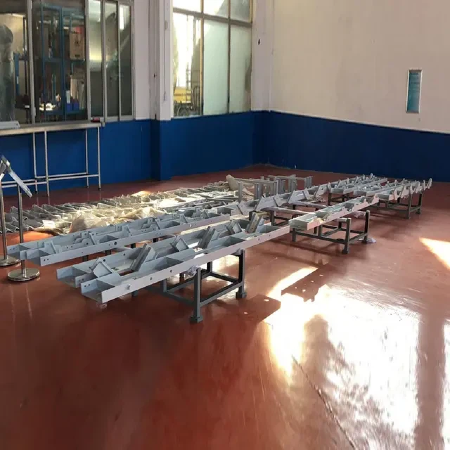
Certain transformer installations require additional insulation or environmental protection to maintain safe operation. In these situations, clamp structures may include insulating materials or protective coatings.
These specialized designs help ensure that mechanical support components do not interfere with electrical insulation requirements.
Transformers installed in coastal areas, chemical processing plants, or heavy industrial environments often face challenging operating conditions. High humidity, airborne particles, and corrosive substances can gradually degrade metal structures.
Clamp systems designed for such environments use corrosion-resistant materials and protective surface treatments to maintain long-term structural stability.
When transformers operate in environments with high moisture or chemical exposure, corrosion-resistant clamp materials become essential. Protective coatings, stainless steel components, and anti-rust treatments help ensure that clamps remain structurally sound for many years.
These protective features also reduce maintenance requirements and extend equipment service life.
One of the most common structural arrangements involves upper and lower clamp plates that compress the transformer core from both directions. These plates apply consistent pressure to the laminated silicon steel core and maintain structural alignment.
This system ensures that the magnetic circuit remains stable during operation.
Some transformer designs use clamp assemblies that include pull plates and tension screws. These components help distribute mechanical force across the entire core structure and allow precise control over compression pressure.
Such systems provide excellent mechanical stability and are often used in large transformer designs.
In transformers with complex structural configurations, reinforced plates or structural webs may be integrated into the clamp system. These reinforcements increase structural rigidity and improve the distribution of mechanical stress across the transformer frame.
This approach is particularly useful for large-capacity transformers where structural loads are higher.
Large utility transformers require robust clamp systems capable of maintaining stability under heavy loads and continuous operation. Heavy-duty clamp structures and reinforced designs are commonly used in these applications.
These clamps help ensure that the transformer core remains securely compressed even under fluctuating electrical loads.
Industrial facilities often operate transformers in demanding environments with vibration, temperature changes, and mechanical stress. Adjustable or reinforced clamp systems are frequently used in these situations because they provide flexibility and strong structural support.
Such clamp designs help maintain reliability in factories, manufacturing plants, and heavy industrial settings.
Renewable energy installations require transformer systems that are compact, reliable, and capable of handling variable load conditions. Clamp systems used in these transformers must balance structural strength with efficient design.
Lightweight but durable clamp structures are often preferred to support efficient installation and long-term stability.
A well-designed transformer clamp must provide sufficient strength while maintaining practical structural weight. Huage’s clamp designs are engineered to achieve this balance, allowing transformers to maintain stability without unnecessary structural mass.
This balance is particularly important for large transformer installations and renewable energy systems where structural efficiency matters.
High-strength structural materials play a key role in clamp performance. Huage uses carefully selected materials to ensure strong load-bearing capacity and resistance to long-term mechanical stress.
Protective surface treatments and corrosion-resistant materials further enhance durability in demanding environments.
Transformer clamps produced by Huage are used in a wide range of applications, including industrial power systems, renewable energy projects, and large-scale electrical infrastructure.
With advanced production equipment and automated manufacturing processes, Huage maintains consistent quality and precision in transformer component manufacturing. The company’s transformer cores and clamp products are trusted by global energy companies such as Siemens, GE, and Hitachi Energy.
Clamp type | Main structural feature | Best application | Main advantage | Key limitation to consider |
Fixed clamp | Predefined structure and dimension | Standard distribution transformers | High structural stability | Limited flexibility |
Adjustable clamp | Adjustable tension and positioning | Custom transformer designs | Flexible installation | Slightly more complex structure |
Heavy-duty clamp | Reinforced structure and thicker material | Large power transformers | High load capacity | Higher material weight |
Insulated clamp | Added insulation and protective coating | Harsh environments | Improved corrosion resistance | Higher manufacturing cost |
Different transformer designs require different structural solutions, and selecting the correct clamp structure is essential for maintaining mechanical stability and long-term reliability. Transformer Clamps are not a one-size-fits-all component; their design must match the transformer size, operating environment, and structural load requirements. Foshan Huage Electric Power Equipment Co., Ltd. has more than two decades of experience manufacturing transformer cores and structural components, providing high-quality clamp systems used by global power equipment companies. Through advanced manufacturing technology, strict quality control, and continuous engineering improvement, Huage delivers clamp systems suitable for industrial, utility, and renewable energy transformer applications. If your project requires durable and reliable transformer clamping systems, contact us today to explore Huage transformer clamp solutions designed for long-term power equipment stability.
1. What are the main types of transformer clamps?
The most common types include fixed clamps, adjustable clamps, heavy-duty clamps, and specialized clamp designs for harsh environments.
2. Which transformer clamp type is best for large power transformers?
Heavy-duty clamp systems are usually preferred because they provide stronger structural support and can handle higher mechanical stress.
3. Why are adjustable transformer clamps useful?
Adjustable clamps allow engineers to fine-tune compression force during installation, making them suitable for transformers with varying structural dimensions.
4. Do environmental conditions affect transformer clamp selection?
Yes. Transformers installed in humid or corrosive environments often require clamps with protective coatings or corrosion-resistant materials to ensure long-term durability.