

close
Choose Your Site
Global
Social Media


In modern electrical systems, transformers play a vital role in transmitting and distributing electrical energy efficiently and safely. Among the various types available, the Single Phase Transformer is one of the most widely used devices in residential, commercial, and light industrial applications. Whether you are powering household appliances, lighting systems, or small machinery, the Single Phase Transformer ensures voltage is converted to appropriate levels for safe operation.
Understanding how a Single Phase Transformer works, its construction, types, applications, and performance characteristics is essential for engineers, electricians, students, and procurement professionals. This comprehensive guide explains everything you need to know about a Single Phase Transformer, including practical comparisons, technical insights, and modern industry trends.
A Single Phase Transformer is an electrical device that transfers electrical energy between two circuits through electromagnetic induction using a single alternating current (AC) phase. The primary function of a Single Phase Transformer is to step up (increase) or step down (decrease) voltage levels while maintaining the same frequency.
Unlike three-phase systems used in heavy industrial applications, a Single Phase Transformer operates on single-phase AC power, which is commonly used in homes and small businesses.
A Single Phase Transformer consists of:
A magnetic core
A primary winding
A secondary winding
When alternating current flows through the primary winding of the Single Phase Transformer, it creates a magnetic field in the core. This magnetic flux induces a voltage in the secondary winding based on the turns ratio.
Operates on single-phase AC supply
Provides voltage transformation
Works on electromagnetic induction principle
Common in residential power distribution
Available in various power ratings
The Single Phase Transformer is typically used in systems where power demand is moderate and does not require three-phase supply.
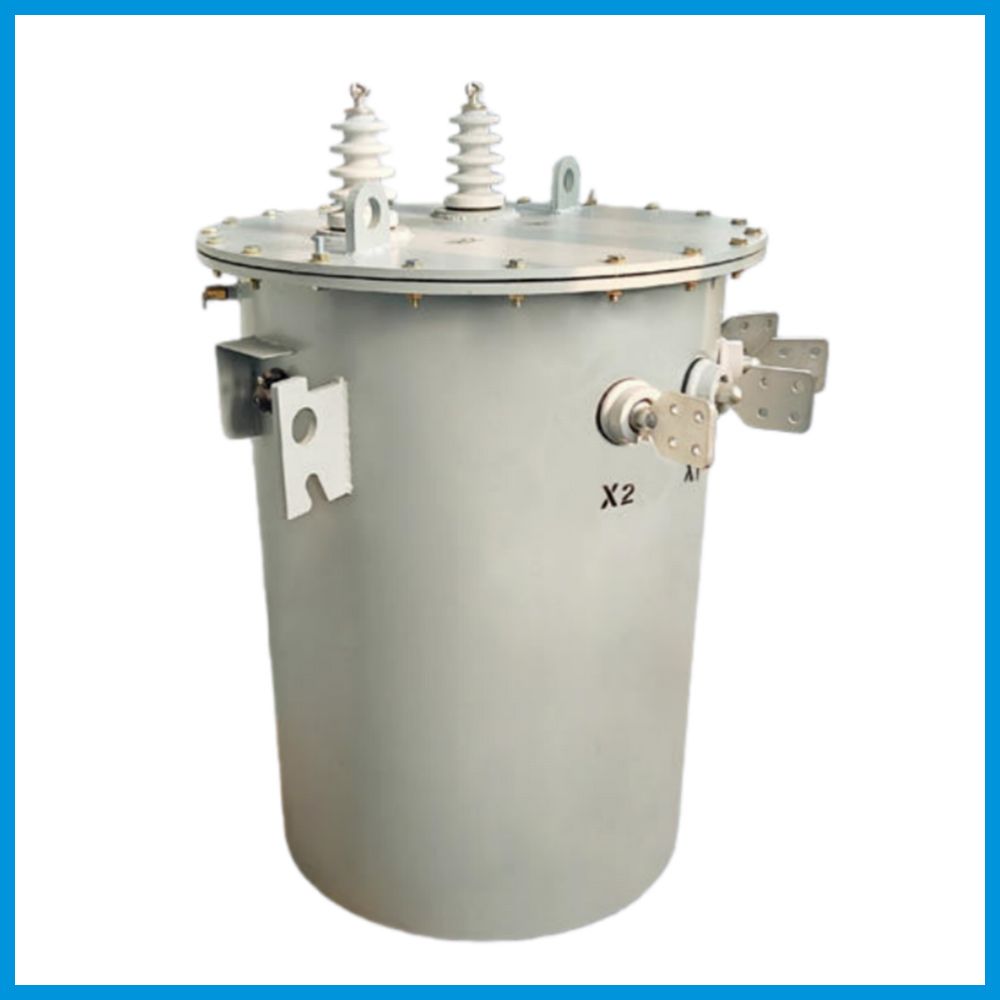
Transformers can be classified based on their electrical network configuration. The Single Phase Transformer is one of several types used in power systems.
The Single Phase Transformer is used in single-phase electrical networks. It is ideal for:
Residential buildings
Small commercial establishments
Lighting circuits
Small equipment
Three-phase transformers are used in heavy industrial systems where higher power transmission efficiency is required.
| Feature | Single Phase Transformer | Three Phase Transformer |
|---|---|---|
| Power Capacity | Low to Medium | High |
| Cost | Lower | Higher |
| Installation Complexity | Simple | Complex |
| Applications | Residential | Industrial |
| Maintenance | Easier | More Complex |
For household and small business applications, the Single Phase Transformer remains the preferred solution due to its simplicity and cost-effectiveness.
The construction of a Single Phase Transformer is relatively straightforward but highly precise.
Magnetic Core
Primary Winding
Secondary Winding
Insulation
Cooling System
The magnetic core of a Single Phase Transformer is typically made of laminated silicon steel sheets. Laminations reduce eddy current losses and improve efficiency.
There are two common core designs:
Core-type Single Phase Transformer
Shell-type Single Phase Transformer
The windings in a Single Phase Transformer are usually made of copper or aluminum conductors. The number of turns in each winding determines voltage transformation.
Voltage ratio formula:
V₁ / V₂ = N₁ / N₂
Where:
V₁ = Primary voltage
V₂ = Secondary voltage
N₁ = Number of primary turns
N₂ = Number of secondary turns
Proper insulation ensures the Single Phase Transformer operates safely and prevents short circuits.
Small Single Phase Transformer units are typically air-cooled. Larger units may use oil cooling to dissipate heat.
The working principle of a Single Phase Transformer is based on Faraday’s Law of Electromagnetic Induction.
AC voltage is applied to the primary winding of the Single Phase Transformer.
Alternating current generates magnetic flux in the core.
The magnetic flux links the secondary winding.
A voltage is induced in the secondary winding.
Voltage transformation occurs according to turns ratio.
Step-Up Single Phase Transformer (increases voltage)
Step-Down Single Phase Transformer (decreases voltage)
Efficiency of a Single Phase Transformer depends on:
Core losses (hysteresis and eddy current losses)
Copper losses
Load conditions
Typical efficiency ranges from 95% to 98% in well-designed Single Phase Transformer units.
Reducing losses improves overall performance of the Single Phase Transformer.
The Single Phase Transformer is widely used in various sectors.
Most homes rely on Single Phase Transformer systems to reduce high transmission voltages to usable levels (e.g., 230V or 120V).
Small offices and retail stores use Single Phase Transformer units for lighting, HVAC, and electronic equipment.
Some Single Phase Transformer designs are integrated into voltage stabilizers to protect appliances from voltage fluctuations.
Isolation Single Phase Transformer units provide electrical isolation between circuits, improving safety.
With increasing solar panel installations, Single Phase Transformer units are used in small-scale solar power systems.
Many power adapters and chargers contain miniature Single Phase Transformer units for voltage conversion.
Modern advancements are improving the design and performance of the Single Phase Transformer.
New materials reduce core losses, increasing Single Phase Transformer efficiency.
Improved insulation materials allow smaller, lightweight Single Phase Transformer units.
IoT-enabled monitoring systems help track performance of the Single Phase Transformer in real-time.
Manufacturers are adopting biodegradable transformer oils and recyclable materials.
These innovations align with global energy efficiency standards and sustainability goals.
The Single Phase Transformer is a fundamental component of modern electrical systems. By converting voltage levels safely and efficiently, it enables homes, offices, and small industries to access reliable power. Its simple construction, cost efficiency, and adaptability make the Single Phase Transformer indispensable in single-phase electrical networks.
With ongoing improvements in materials, energy efficiency, and monitoring technology, the Single Phase Transformer continues to evolve, meeting the demands of modern energy systems. Whether used for residential distribution, isolation, renewable integration, or voltage regulation, the Single Phase Transformer remains a cornerstone of electrical engineering.
The primary function of a Single Phase Transformer is to step up or step down voltage levels in a single-phase AC system.
A Single Phase Transformer is commonly used in residential homes, small offices, and light commercial buildings.
Most Single Phase Transformer units operate with efficiencies between 95% and 98%, depending on design and load conditions.
A Single Phase Transformer operates on single-phase power for smaller loads, while three-phase transformers handle higher industrial loads.
Yes, a Single Phase Transformer is often used in small-scale solar power systems for voltage regulation and grid compatibility.
By understanding its structure, working principle, and applications, you can confidently select and utilize the Single Phase Transformer for various electrical needs.