
close
Choose Your Site
Global
Social Media


Views: 0 Author: Site Editor Publish Time: 2026-03-05 Origin: Site


Transformers are often discussed in terms of magnetic cores, copper windings, insulation systems, and electrical efficiency. Yet the mechanical stability of these internal components is just as critical to reliable operation. Without proper structural support, even the most advanced transformer design can suffer from vibration, internal displacement, and long-term mechanical fatigue. This is where Transformer Clamps play a crucial role. Although they are not always the most visible component in a transformer assembly, they directly influence how securely the core and winding structures remain fixed during operation. Understanding their purpose helps buyers, engineers, and maintenance teams appreciate why clamp quality matters for transformer reliability, noise control, and service life.
Transformer clamps are mechanical structural components used to secure the iron core and related assemblies inside a transformer. Their main function is to apply consistent pressure and hold the laminated core stacks, yokes, and supporting structural elements firmly together. By maintaining this compression, clamps prevent movement or separation of the magnetic core during operation.
Unlike standard bolts or general fastening hardware, these components are specifically engineered to work inside transformer structures. They must withstand long-term mechanical stress, thermal expansion, electromagnetic vibration, and environmental influences without losing their structural integrity.
Inside a transformer, clamps are typically located at the top and bottom sections of the core structure. The upper clamp and lower clamp work together to compress the laminated silicon steel core and keep the magnetic circuit stable. These clamps are connected through structural members such as tension rods, plates, or beams that distribute pressure across the entire core assembly.
This positioning allows the clamps to maintain a uniform mechanical force across the core structure. The result is a transformer that operates quietly, efficiently, and with minimal internal movement.
At first glance, transformer clamps might appear similar to heavy metal brackets or structural fasteners. However, they are designed for a very different environment. Transformers experience electromagnetic forces, mechanical vibration, thermal cycling, and sometimes sudden stress during fault conditions. Ordinary fastening hardware cannot maintain consistent compression under these circumstances.
Transformer clamps are engineered to resist deformation, corrosion, and loosening. Their design ensures that the mechanical force applied during assembly remains stable over many years of operation.
Transformers operate under constantly changing electrical loads. As current flows through the windings and magnetic flux changes within the core, mechanical forces are generated inside the structure. If the internal components are not securely held in place, small movements can occur over time.
Even minor internal displacement can affect alignment, increase vibration, and reduce structural stability. Properly designed clamps prevent these issues by maintaining consistent mechanical pressure on the core assembly.
Transformer noise is often associated with magnetostriction within the core laminations. When the laminations expand and contract slightly during each electrical cycle, they can produce audible vibration. If the core is not firmly compressed, these vibrations become more noticeable.
Clamps help minimize this effect by maintaining tight mechanical contact between laminations. By reducing internal movement, they help keep transformer noise levels under control, which is especially important in urban power installations and industrial environments.
A transformer is expected to operate reliably for decades. Mechanical stability plays a significant role in achieving that lifespan. When the core structure remains firmly secured, internal components experience less wear and stress.
Strong clamps therefore contribute to overall transformer reliability. They reduce the risk of internal deformation, minimize structural fatigue, and help maintain stable electrical performance over time.
The most fundamental role of a transformer clamp is to secure the laminated iron core. The core forms the magnetic pathway that allows electrical energy to be transferred efficiently between windings.
Because the core is assembled from hundreds or thousands of laminated silicon steel sheets, it must be tightly compressed to function properly. Clamps apply this compression and keep the core stack stable.
Transformer cores and windings are heavy structures. In large power transformers, the mechanical load can be substantial. Clamps must support this weight while also resisting dynamic forces created during operation.
In addition to normal operating conditions, transformers may occasionally experience short-circuit events. During these events, extremely high electromagnetic forces can occur. A well-designed clamp system helps distribute these forces and maintain structural stability.
While the primary function of clamps is mechanical support, certain clamp structures also assist with airflow and structural heat dissipation. Proper spacing and structural configuration can help ensure that heat generated by the core and windings is dissipated effectively.
This contributes indirectly to overall transformer efficiency and longevity.
Mechanical components inside transformers must maintain their performance for many years. When clamps are poorly designed or manufactured with insufficient strength, several problems can arise.
If clamps fail to maintain adequate compression, the core laminations may gradually shift. This misalignment can compromise structural stability and lead to uneven stress distribution inside the transformer.
Loose or weak clamp structures allow increased vibration during operation. Over time, repeated mechanical movement can accelerate wear on both the core and surrounding structural components.
Transformers installed in humid, coastal, or industrial environments may face significant corrosion risks. If clamp materials lack adequate corrosion resistance, structural integrity may gradually decline.
This is why high-quality materials and protective treatments are essential in clamp manufacturing.
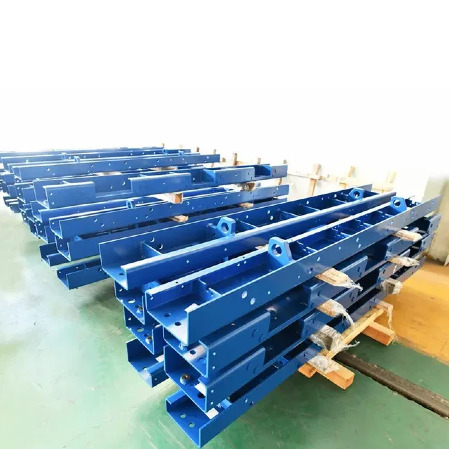
Material selection is one of the most important aspects of clamp design. High-strength low-alloy steel provides excellent tensile strength and load-bearing capacity. Compared with ordinary structural steel, this type of material can handle higher mechanical stress without deformation.
Using stronger materials ensures that the clamp maintains its compression force even under demanding operating conditions.
Transformer installations often operate in challenging environments. Moisture, temperature changes, and industrial pollutants can gradually affect exposed metal components.
Applying advanced anti-corrosion treatments helps protect clamps from rust and degradation. Stainless steel components in key connection points further enhance durability.
A clamp must fit the transformer structure precisely. Accurate manufacturing ensures even pressure distribution across the core assembly. Poorly aligned or inaccurately produced clamps may create uneven stress, which can lead to long-term mechanical problems.
This is why modern manufacturing processes and quality control systems are essential in transformer component production.
Transformer clamps are used in a wide range of electrical infrastructure and industrial systems. Their applications extend across several important sectors.
In power transmission networks, large transformers must operate continuously under high electrical loads. Clamp systems help maintain core stability during long-term operation, ensuring that the magnetic circuit remains secure.
Industrial facilities such as steel plants, chemical processing plants, and manufacturing factories often require transformers capable of operating under high temperature and vibration conditions. Robust clamp systems help maintain structural stability in these challenging environments.
The growth of solar and wind energy has increased the demand for compact and reliable transformers. In renewable energy systems, equipment often operates under variable load conditions. Durable clamp structures help maintain stability even when operating conditions change frequently.
Transformer components are not just about initial installation. Long-term maintenance and operational reliability are equally important considerations for power utilities and industrial operators.
Strong and reliable clamps reduce the likelihood of structural problems inside the transformer. This helps avoid unexpected downtime and costly repairs.
A transformer that maintains stable internal structure requires fewer inspections and less corrective maintenance. Over time, this significantly reduces operational costs.
When transformer components maintain consistent performance for many years, operators benefit from predictable maintenance schedules and longer equipment lifespans.
Clamp function | What it controls inside the transformer | What risk it helps reduce | Buyer benefit |
Core compression | Holds laminated core stack tightly | Core vibration and displacement | Stable magnetic performance |
Structural support | Maintains overall core frame integrity | Mechanical deformation | Longer equipment life |
Vibration control | Limits movement of core components | Noise and mechanical wear | Quieter operation |
Load distribution | Handles weight and short-circuit forces | Structural failure | Improved safety and reliability |
Mechanical stability is often overlooked when discussing transformer performance, yet it plays a fundamental role in ensuring safe and reliable operation. Transformer Clamps provide the structural force that keeps the core and internal components firmly in place, reducing vibration, controlling noise, and supporting long-term transformer reliability. With more than two decades of manufacturing experience, Foshan Huage Electric Power Equipment Co., Ltd. specializes in producing high-quality transformer components including distribution transformer cores and durable clamping systems. Advanced production equipment, automated manufacturing lines, and strict quality control allow Huage to deliver products trusted by global energy companies such as Siemens, GE, and Hitachi Energy. For projects that require stable transformer structures and dependable mechanical performance, choosing reliable transformer core clamps can make a significant difference. Contact us today to learn more about Huage transformer clamp solutions and how they can support your power equipment projects.
1. What is the main function of transformer clamps?
Transformer clamps secure the laminated iron core and related structural components inside a transformer. By applying consistent compression, they prevent movement and maintain mechanical stability during operation.
2. Do transformer clamps affect transformer noise levels?
Yes. When the core is firmly compressed by properly designed clamps, vibration between laminations is reduced. This helps lower the overall noise level during transformer operation.
3. What materials are commonly used for transformer clamps?
High-strength structural steel is commonly used because it provides strong load-bearing capacity. Corrosion-resistant treatments and stainless steel parts are often applied to improve durability.
4. Where are transformer clamps most commonly used?
Transformer clamps are widely used in power grid transformers, industrial electrical systems, renewable energy installations, and other equipment that relies on stable transformer operation.


