

close
Choose Your Site
Global
Social Media


Views: 0 Author: Site Editor Publish Time: 2025-10-13 Origin: Site


You can find a few main types of transformer cores in the electrical industry. These include solid iron or steel cores, laminated silicon steel cores, and amorphous steel cores. Picking the right core is important. Each type works best for power, distribution, oil-immersed, or dry-type transformers. They all have different needs for efficiency and installation.
Pick the best transformer core type for your needs. You can choose core type, shell type, or special designs. Each one works well for different uses.
Pick cores that have high permeability and low energy loss. Amorphous and cold-rolled silicon steel cores save energy. They also help transformers work better.
Think about long-term costs and the environment when you pick transformer cores. Efficient cores waste less energy. They also help follow energy rules.
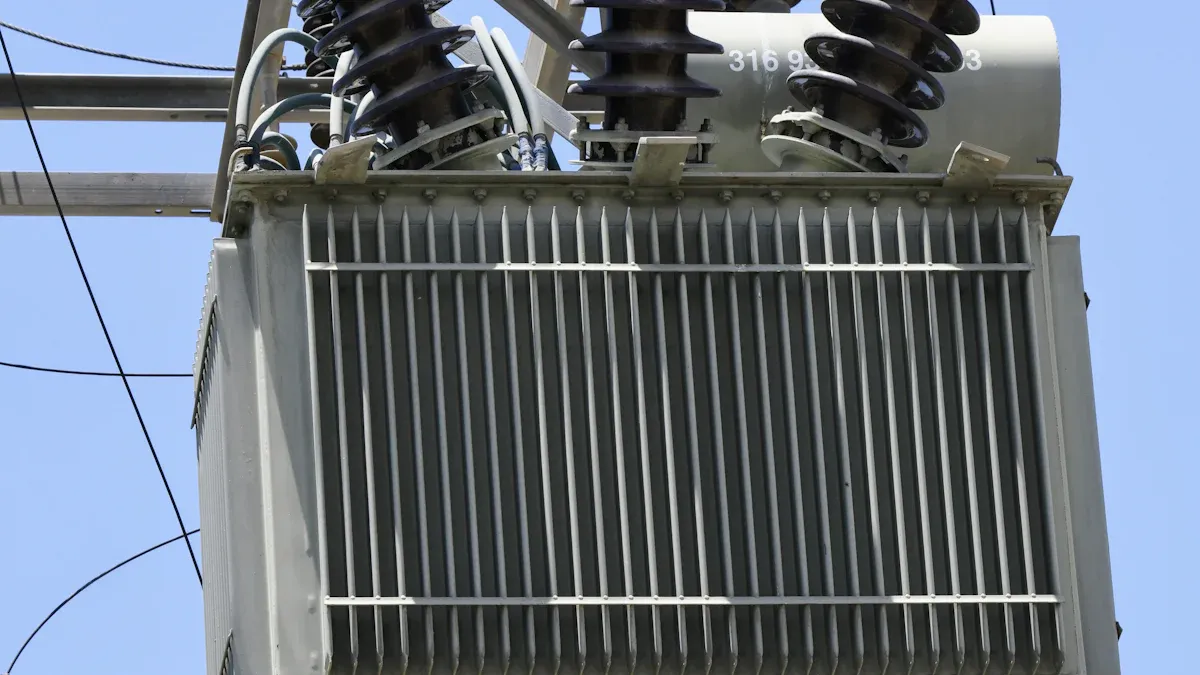
Transformer cores are very important in transformers. They help change voltage for different uses. For example, they raise voltage for power lines or lower it for houses. Most transformer cores are made from silicon steel or soft iron. These materials let magnetic fields move easily. This helps energy move from one coil to another.
The main types of transformer cores are core type, shell type, and some special designs. Each type is used for different transformers. These include power transformers, distribution transformers, oil-immersed transformers, dry-typed transformers, and three phase oil-immersed transformers.
Core type transformer cores have a simple shape. The core goes around the windings and looks like an "E" or "U." This shape gives a short path for magnetism. It makes the transformer work better and stay cool. You see core type designs in power and distribution transformers. They are good when you need steady power.
Shell type transformer cores go all the way around the windings. This makes them strong and able to handle short circuits. Shell type cores are used in big jobs, like industrial transformers and three phase oil-immersed transformers. If you want a transformer core that loses little energy and is tough, shell type is a smart pick.
There are other designs too, like laminated, toroidal, amorphous, ferrite, and air cores. Laminated cores use thin layers to save energy. Toroidal cores are round and small, so they fit in medical equipment. Amorphous and nanocrystalline cores have high permeability and low losses. They are great for saving energy. Ferrite and air cores are used for high-frequency or special jobs. Some transformers use magnetite or iron transformer core materials for certain needs.
Core Type | Common Applications |
|---|---|
Laminated Core | Power transformer, Distribution transformer |
Toroidal Core | Medical, Audio, High-frequency |
Amorphous Metal Core | Energy-efficient, Renewable energy |
Shell Type Core | High-power, Industrial, Three phase oil-immersed transformer |
Core type and shell type transformer cores are built differently. The way they are made changes how they work and where you use them. Look at this table to see the main differences:
Aspect | Core Type Transformer | Shell Type Transformer |
|---|---|---|
Shape of core laminations | U and I shaped laminations | U and T or E and I shaped laminations |
Cross section of core | Square, cruciform, two-stepped, three-stepped | Rectangular |
Number of limbs and yokes | Two limbs and two yokes | Three limbs and two yokes |
Number of magnetic circuits | Single magnetic circuit | Two magnetic circuits |
Type of winding | Concentric (cylindrical) winding | Sandwich (interleaved or disc) winding |
Placement of winding | Windings on two separate limbs | Both windings on the central limb |
Conductor material | Requires more conductor material | Requires less winding conductor material |
Iron for core construction | Requires less iron | Needs comparatively more iron |
Core loss | More core loss due to total flux | Less core loss as half the flux flows |
Copper loss | More copper loss | Comparatively less copper loss |
Natural cooling | More effective due to distributed windings | Poor natural cooling |
Repair and maintenance | Easier to dismantle for maintenance | Relatively difficult to dismantle |
Average winding length | Shorter winding length, lower impedance | Longer winding length, higher impedance |
Average core length | Longer magnetic core length | Shorter magnetic core length |
Problem of tank heating | No path for zero sequence flux, causes heating | Provides path for zero sequence current |
Applications | High voltage and high power applications | Low voltage and low power applications |
Cold rolled silicon steel transformer cores use thin steel sheets. These sheets help stop energy loss and make magnetism better. Traditional laminated cores use layers of silicon steel stacked together. Laminated cores work well, but cold rolled cores save more energy.
Core Type | Structure Description | Efficiency Characteristics |
|---|---|---|
Cold Rolled Silicon Steel | Made from cold-rolled silicon steel laminations, designed to minimize energy losses. | Improved magnetic properties, low hysteresis loss. |
Traditional Laminated | Stacked layers of silicon steel laminations, insulated to reduce eddy current loss. | Effective but less efficient than cold-rolled cores. |
Transformer cores are important for how well a transformer works. You want a core that is efficient to save money and energy. Here is a table that shows how core type and shell type work in factories:
Transformer Type | Efficiency Characteristics |
|---|---|
Core Type | Laminated cores lower energy loss, work better, and handle strong forces. They cool down faster and are good for high power. |
Shell Type | They lose less energy and manage heat well. This stops hot spots and keeps them working well for a long time. |
You can pick low loss transformer core designs like amorphous alloy cores. These cores have very low hysteresis and eddy current losses. Amorphous transformer cores can cut energy loss by up to 70% compared to regular silicon steel cores. This makes them great for saving energy in power transformer and distribution transformer jobs.
Amorphous cores use very thin ribbons to lower eddy current loss.
These cores have low coercivity, so they lose less energy from hysteresis.
Cold rolled silicon steel cores also help, but amorphous cores are even better.
Ferrite and toroidal transformer cores have high permeability and work at high frequencies. You can use high permeability transformer core materials for dry-typed transformer and electronic devices. Toroidal cores are small and block electromagnetic interference. They keep signals clear and work well in sensitive equipment.
You need to choose the right transformer core for your job. This table shows which core types fit different transformer uses:
Transformer Type | Recommended Core Type | Advantages | Applications |
|---|---|---|---|
Power Transformer | Core-Type, Amorphous | High efficiency, low loss, strong design | Power generation, transmission |
Distribution Transformer | Core-Type, Cold Rolled | Cost-effective, efficient, easy maintenance | Power distribution |
Oil-Immersed Transformer | Shell-Type, Core-Type | Handles high loads, strong protection | Industrial, high-load |
Dry-Typed Transformer | Ferrite, Amorphous, Toroidal | High permeability, compact, low noise | Electronics, medical, audio |
Three Phase Oil-Immersed | Shell-Type, Core-Type | Strong construction, good for high current | Industrial, large-scale power |
A 3 phase transformer core is used for three phase oil-immersed transformer jobs. Shell type transformer cores are good for high current and low voltage. Core type transformer cores are best for high voltage and general use. Toroidal transformer cores are great for electronics because they are small and block interference.
When you pick a transformer core, think about these things:
Factor | Description |
|---|---|
Core Shape | Shapes like toroidal, E-I, and U change how well it works. |
Core Dimensions | The right size helps with cooling, efficiency, and cost. |
Material Compatibility | The core material must match the bobbin to avoid problems. |
You should also think about long-term costs. Efficient transformer core materials, like amorphous metal, lower energy loss and keep the transformer cooler. This helps your transformer last longer and need less fixing. Picking a low loss transformer core saves you money over time.
Tip: If you want your transformer to work well and save energy, choose transformer cores with high permeability and low loss. The Huage brand has many magnetite transformer core and iron transformer core choices for power transformer, distribution transformer, oil-immersed transformer, dry-typed transformer, and three phase oil-immersed transformer jobs.
Environmental rules are important too. Picking the right transformer cores helps you follow energy rules and lowers pollution. Amorphous steel cores are a good pick if you want to save energy and help the environment.
You should pick the right transformer core for each job. Dry-type transformers need quiet and efficient transformer cores. Oil-immersed transformers use strong iron transformer cores. The situation changes which core you should use:
Application Scenario | Transformer Type | Key Considerations |
|---|---|---|
Urban Grids | Dry-type | Quiet, saves energy, low loss transformer core |
Industrial Applications | Oil-immersed | Handles big loads, uses magnetite transformer core |
Renewable Energy Plants | Amorphous alloy | Light, high permeability transformer core |
When you choose a transformer core, think about what you might need later. Also, check if you need taps for bigger transformers.
Pick a transformer core that does not lose much energy. Amorphous transformer cores and high permeability transformer cores help save energy. They work well in power transformer and distribution transformer jobs.
You can put a 3 phase transformer core in a dry-typed transformer. This setup is good for three phase oil-immersed transformer and for big factory jobs.
Magnetite transformer core and iron transformer core are strong and last long.
These materials are good for oil-immersed transformer and power transformer work.