

close
Choose Your Site
Global
Social Media


Transformer performance is often discussed in terms of electrical efficiency, magnetic flux, and insulation systems, yet the mechanical structure inside the transformer is just as critical. Stable internal components ensure that the magnetic circuit and windings remain correctly aligned during operation. Without reliable mechanical restraint, vibration, electromagnetic force, and thermal expansion could gradually affect the internal structure. This is why Transformer Clamps are an essential part of transformer design. They provide the controlled mechanical pressure that holds the core and structural parts together, ensuring long-term stability and safe operation.
The working principle of a transformer clamp is based on applying and maintaining controlled mechanical force. When a transformer is assembled, the core and its laminated steel sheets must be tightly compressed so they behave as a stable magnetic unit. Clamps apply this compression force and keep all structural components in their correct positions.
This restraint ensures that the transformer core does not shift when exposed to vibration, magnetic forces, or mechanical stress. By holding the structure firmly in place, the clamp helps maintain consistent performance throughout the life of the transformer.
A transformer clamp does more than simply connect metal components together. Its primary role is to maintain continuous compression pressure across the core structure. This compression must remain stable even when the transformer operates under varying electrical loads or environmental conditions.
Stable compression prevents small gaps from forming between laminated steel sheets. These gaps could increase vibration, reduce magnetic efficiency, and lead to additional mechanical stress inside the transformer.
Transformers are expected to operate reliably for decades. During this time they experience constant electrical load changes, temperature fluctuations, and mechanical stress. The clamp system ensures that these conditions do not cause gradual displacement of internal components.
When compression remains stable, the transformer core continues to operate as a unified structure. This contributes to lower vibration levels, improved durability, and consistent electrical performance.
The most direct way a clamp generates holding force is through mechanical tightening. During transformer assembly, bolts and tension rods are tightened to apply compression to the clamp plates. This action creates clamping pressure that holds the laminated core together.
The amount of pressure must be carefully controlled. Too little pressure allows movement within the core structure, while excessive pressure could damage components. Proper clamp design ensures that the correct level of compression is achieved and maintained.
Once the clamp bolts are tightened, the pressure generated by the clamp plates compresses the entire core assembly. This compression prevents the laminated steel sheets from shifting during operation.
Because the magnetic field inside the transformer changes constantly, mechanical forces are generated within the core. Clamps counteract these forces by maintaining steady compression.
Transformers operate for long periods under vibration and thermal expansion. If the clamping force is insufficient, the bolts and structural components may gradually loosen. When this happens, the core laminations may begin to move slightly during operation.
Properly engineered clamps maintain enough force to prevent this movement. This helps preserve the mechanical integrity of the transformer throughout its service life.
Most transformer clamp systems use an upper clamp and a lower clamp to apply compression from both directions. These plates press against the top and bottom sections of the laminated core stack.
This arrangement ensures that pressure is distributed evenly across the entire core structure. Balanced compression helps maintain the alignment of the core limbs and yokes.
Clamp systems often include structural members such as pull plates, tie rods, and connecting beams. These components transmit the compression force from the clamp plates to the entire core assembly.
By distributing the load across multiple structural elements, the clamp system prevents localized stress. This improves mechanical stability and helps protect the transformer core.
Large transformers may include reinforced plates or structural webs integrated into the clamp design. These reinforcements strengthen the clamp system and help distribute mechanical stress more evenly across the core frame.
Such reinforcement is particularly important in high-capacity transformers where the core weight and electromagnetic forces are greater.
When core laminations are firmly compressed, they behave as a single stable unit. This reduces the amount of movement that occurs during each electrical cycle.
Stable components generate fewer mechanical vibrations, which contributes to smoother transformer operation.
If the laminated steel sheets were allowed to move freely, they would repeatedly impact one another during operation. Over time this could lead to mechanical wear and increased vibration.
Clamps prevent this by holding the laminations tightly together, minimizing internal friction and impact.
Transformer noise is often associated with vibration within the core structure. By maintaining strong compression across the core, clamps reduce these vibrations and help keep transformer noise levels under control.
This is particularly important in urban substations or industrial facilities where noise reduction is a priority.
During normal operation, the mechanical forces inside a transformer remain relatively stable. However, fault conditions such as short circuits can produce extremely strong electromagnetic forces.
These forces can push or pull on the windings and core structure. Clamp systems must be strong enough to withstand these sudden stresses.
When electrical faults occur, axial forces acting on the transformer core may increase significantly. If the clamp structure is weak, the core assembly could shift or deform.
Strong clamps ensure that the core remains securely compressed even during abnormal conditions.
If the clamp system does not provide sufficient compression, several issues may appear. Core laminations may loosen, vibration may increase, and internal structural stability may decline.
Over time this can lead to reduced transformer efficiency and increased maintenance requirements.
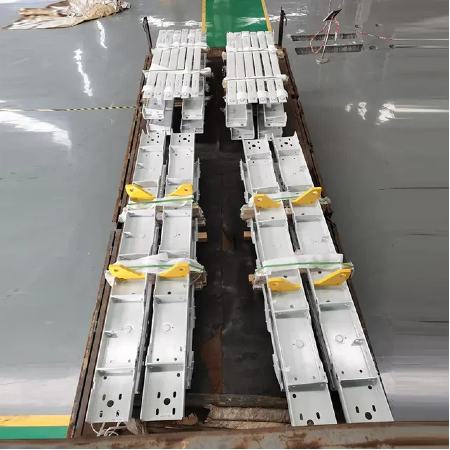
Clamp performance depends heavily on the materials used in its construction. High-strength structural steel allows the clamp to maintain compression force without bending or deforming.
This is especially important in large transformers where the mechanical load is significant.
Environmental conditions can gradually affect metal components. Moisture, temperature changes, and industrial pollution may cause corrosion over time.
Corrosion-resistant materials and protective coatings help maintain clamp strength and structural integrity.
The working principle of a clamp relies on precise mechanical alignment. Accurate manufacturing ensures that clamp plates apply even pressure across the transformer core.
Advanced manufacturing equipment allows transformer clamp components to be produced with high dimensional accuracy. This helps ensure stable compression and reliable operation.
Long-term exposure to humidity or industrial environments can affect metal components. If clamp materials are not properly protected, corrosion may gradually reduce structural strength.
Using corrosion-resistant materials and protective coatings helps prevent this problem.
Transformers experience constant thermal expansion and contraction as temperatures change during operation. Combined with electromagnetic vibration, these cycles can place stress on mechanical components.
High-quality clamp designs account for these factors and maintain compression despite temperature changes.
Even a well-designed clamp system requires proper installation. Uneven bolt tightening or incorrect assembly procedures can lead to uneven pressure distribution.
Careful installation ensures that the clamp system performs as intended and maintains stable compression.
Understanding how a clamp works helps buyers evaluate the long-term reliability of transformer components. Strong clamp systems contribute to stable transformer operation and reduce the risk of mechanical failure.
Two clamps may appear visually similar but perform very differently depending on their structural design and material strength. Knowledge of the working principle helps buyers recognize these differences.
When engineers understand how clamp systems maintain mechanical pressure, they can specify transformer components more effectively. This leads to better equipment performance and lower maintenance costs.
Step in operation | What the clamp is doing | What part is involved | Why it matters for transformer stability |
Assembly stage | Applying compression to the core | Clamp plates and bolts | Holds laminated steel sheets together |
Structural tightening | Distributing mechanical force | Pull plates and rods | Ensures even pressure across the core |
Normal operation | Maintaining stable compression | Upper and lower clamps | Prevents vibration and movement |
Fault conditions | Resisting sudden mechanical force | Reinforced clamp structure | Protects core alignment and stability |
Mechanical stability is just as important as electrical performance in transformer operation. By applying consistent compression and maintaining structural restraint, Transformer Clamps ensure that the core and internal components remain securely positioned throughout the transformer’s lifetime. Foshan Huage Electric Power Equipment Co., Ltd. has built more than two decades of expertise in manufacturing transformer cores and structural components, supplying reliable products to global energy companies such as Siemens, GE, and Hitachi Energy. With advanced automated production equipment, precision manufacturing processes, and strict quality control, Huage provides durable clamp systems that support stable transformer operation in industrial, utility, and renewable energy applications. If your project requires dependable transformer structural components, contact us today to learn more about Huage’s high-quality transformer core clamping systems and how they can help ensure long-term equipment stability.
1. What is the working principle of transformer clamps?
Transformer clamps work by applying controlled mechanical compression to the transformer core structure. This compression prevents movement of laminated steel sheets and maintains structural stability.
2. Why is compression important in transformer core structures?
Compression keeps the laminated core sheets tightly aligned, which reduces vibration, prevents mechanical displacement, and helps maintain efficient magnetic performance.
3. Can poor clamp design affect transformer reliability?
Yes. Weak or poorly manufactured clamps may lose compression over time, leading to increased vibration, internal movement, and potential mechanical damage.
4. How do transformer clamps help reduce noise?
By holding the core laminations tightly together, clamps reduce internal vibration within the transformer. Lower vibration levels help reduce operational noise.